Market Outlook · 5 Min Read
Why the next decade of Carolina industrial belongs to the port towns.
Freight is re-routing south, deep water is scarce, and the Cape Fear corridor sits at the intersection of coastal growth, port access, and logistics demand.
For much of the last forty years, the story of American logistics was a story about inland distribution: interstates, rail corridors, and large-format warehouses positioned outside major population centers.
That story is changing. As supply chains diversify and population growth continues across the Southeast, smaller port cities and coastal logistics markets are becoming increasingly important. Wilmington, North Carolina, is one of those markets.
The Cape Fear region is not trying to become Atlanta, Charlotte, Savannah, or Charleston. Its opportunity is different: a port-adjacent coastal market with working waterfront infrastructure, industrial land demand, population growth, and a quality-of-life profile that continues attracting residents, businesses, and investment.
Three forces are converging on the Cape Fear.
The region benefits from a combination of port access, waterfront infrastructure, regional population growth, and proximity to expanding commercial corridors. For developers, tenants, and long-term owners, those conditions create a different kind of opportunity.
- Port access remains difficult to replicate.
- Industrial users continue to seek flexible, well-located space.
- Coastal population growth supports broader commercial demand.
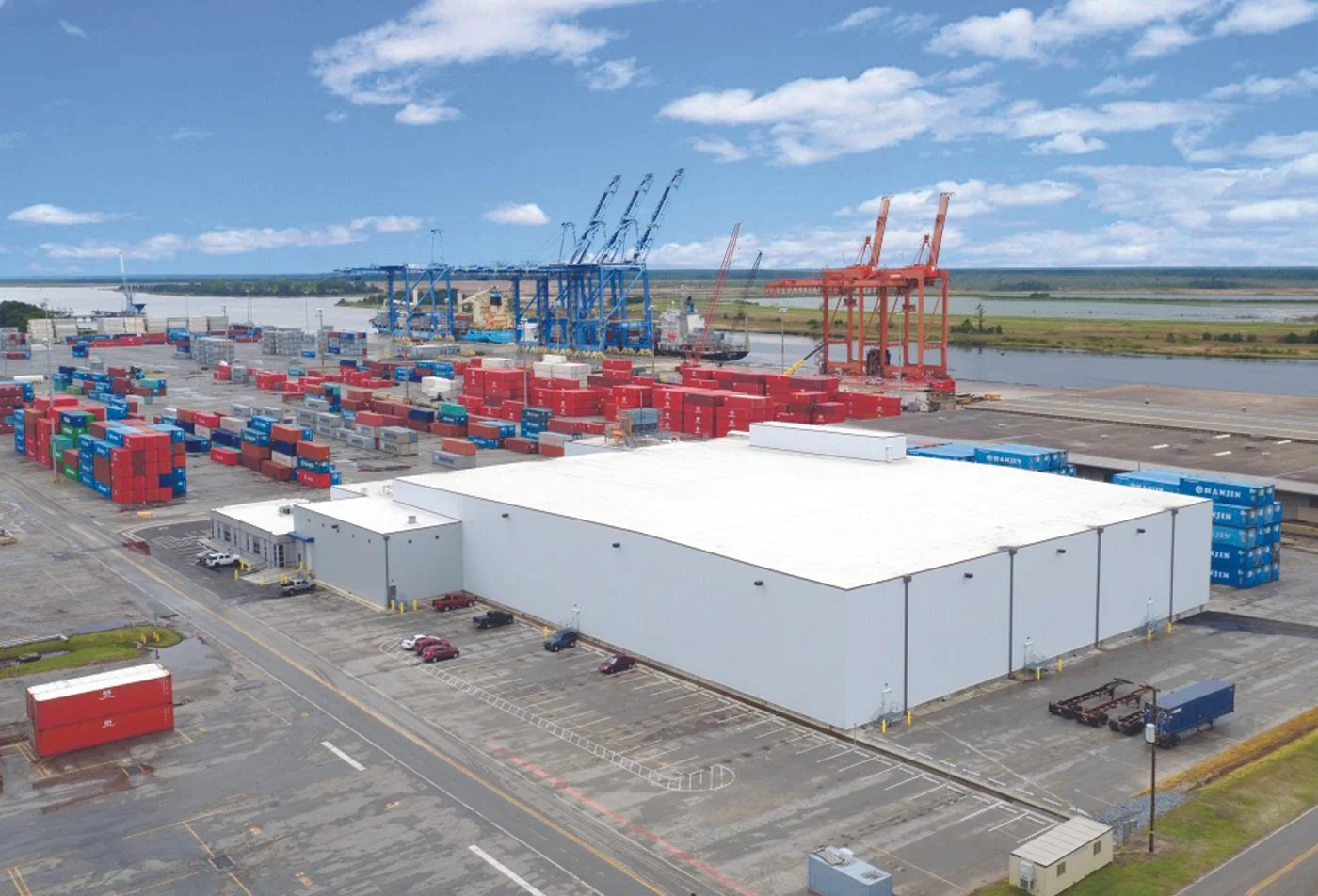
Industrial real estate near ports, freight corridors, and growing communities is increasingly shaped by location quality and infrastructure access.
These forces do not operate separately. Population growth increases the need for service businesses, construction supply, food distribution, repair operations, logistics support, and local warehousing. Port activity adds another layer of demand by connecting regional producers and import/export users to broader supply chains.
Industrial demand is becoming more local and more strategic.
In many secondary coastal markets, industrial demand is not only about large-scale distribution centers. It is also about practical, flexible space that supports local and regional operators: contractors, suppliers, marine services, light manufacturers, logistics providers, repair businesses, and companies that need proximity to both customers and infrastructure.
That type of demand rewards well-located, functional industrial product. Users may not need millions of square feet, but they do need access, clear circulation, modern buildings, durable infrastructure, and sites that allow them to operate efficiently.
The strongest development opportunities often sit where infrastructure, access, and long-term community growth overlap.
We cannot outsource scarcity.
Deep water, working waterfront, transportation access, and entitled industrial land are all limited resources. As demand grows, the value of well-positioned sites becomes more apparent.
Scarcity is especially important in port towns because much of the most valuable land is physically constrained. Waterfronts are finite. Industrial corridors have competing uses. Entitlements take time. Infrastructure must be planned. Flood, storm, access, utility, and environmental considerations all affect what can be built and where.
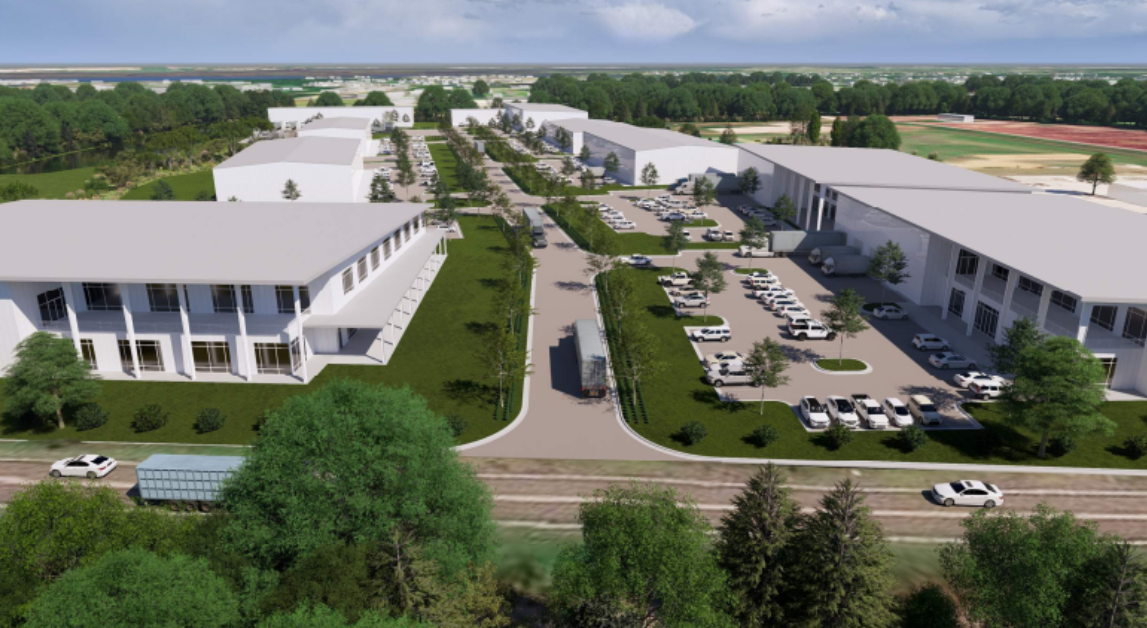
For Zephyr Development, that means evaluating projects through a practical lens: site fundamentals, market context, long-term usability, and the ability to serve real tenants, residents, visitors, and businesses over time.
Where the decade actually lands.
The next decade of industrial growth will not belong only to the largest logistics hubs. It will also belong to smaller, well-positioned port markets where infrastructure, livability, access, and land availability intersect.
Wilmington and the Cape Fear region are part of that larger story: a place where waterfront activity, port access, industrial growth, and regional development continue to shape what comes next.
The opportunity is not simply to build more industrial space. The opportunity is to create durable industrial and mixed-use assets that respond to the way coastal markets are changing: more active, more connected, more constrained, and more dependent on thoughtful long-term planning.