Design & Build · 5 Min Read
Designing waterfront projects for resilience.
Why successful waterfront development requires careful attention to access, durability, public realm, and long-term site conditions.

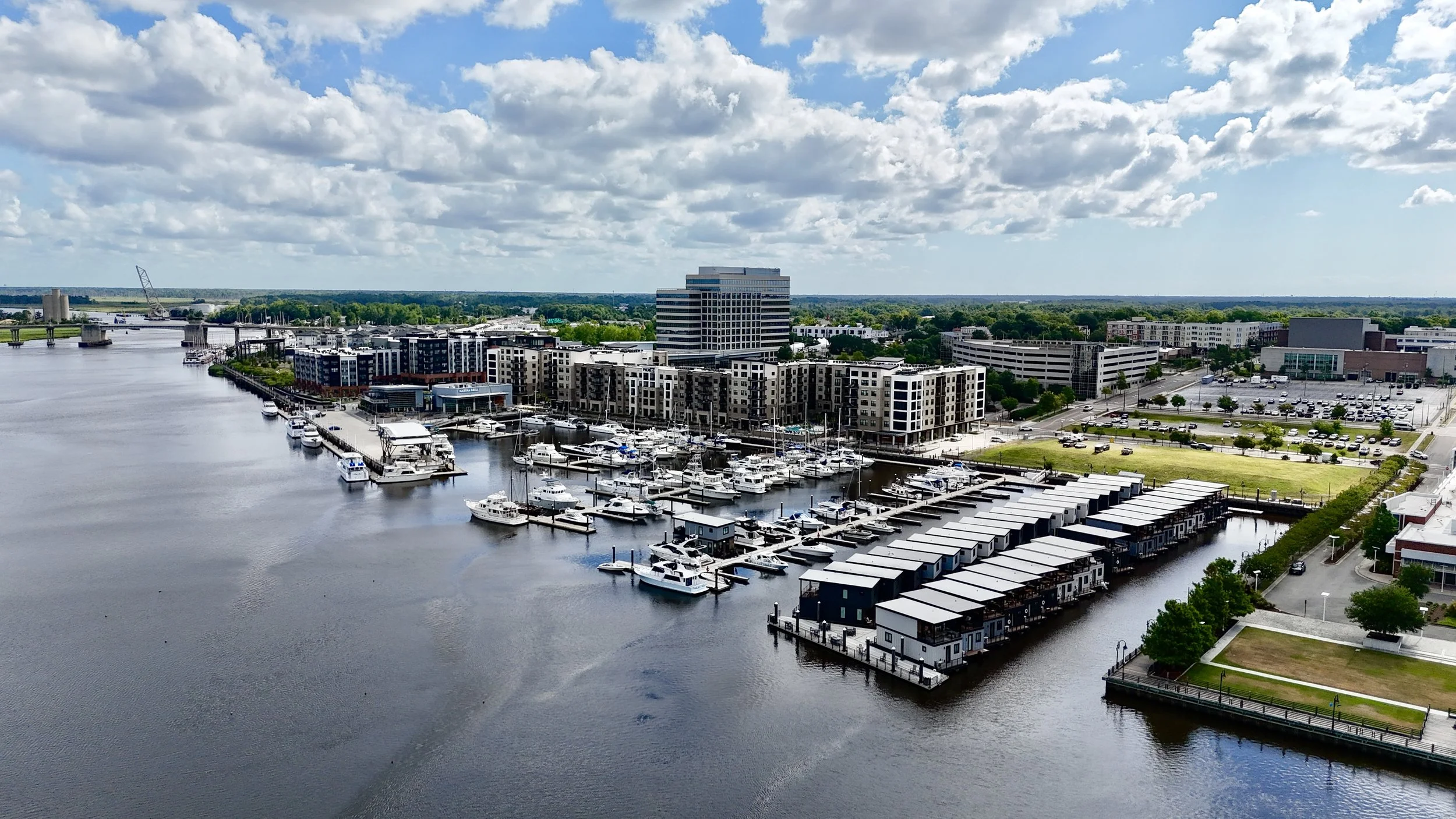
Waterfront development is never only about what gets built. It is also about how a place meets water, weather, infrastructure, and public life over time.
Successful waterfront projects require more than attractive buildings and strong market demand. They require careful attention to access, drainage, materials, circulation, site elevation, public edges, and the everyday experience of people moving through the property.
Access shapes the project before architecture does.
On waterfront sites, access is both practical and experiential. Vehicles, pedestrians, service routes, marina users, emergency access, and public visitors may all need to move through the same district without conflict.
- Public access should feel intuitive, not leftover.
- Service access should be functional without dominating the site.
- Waterfront edges should connect people to the place, not separate them from it.
Before materials and finishes are selected, the strongest waterfront projects begin with site planning that respects access, exposure, and long-term use.
Durability is a design decision.
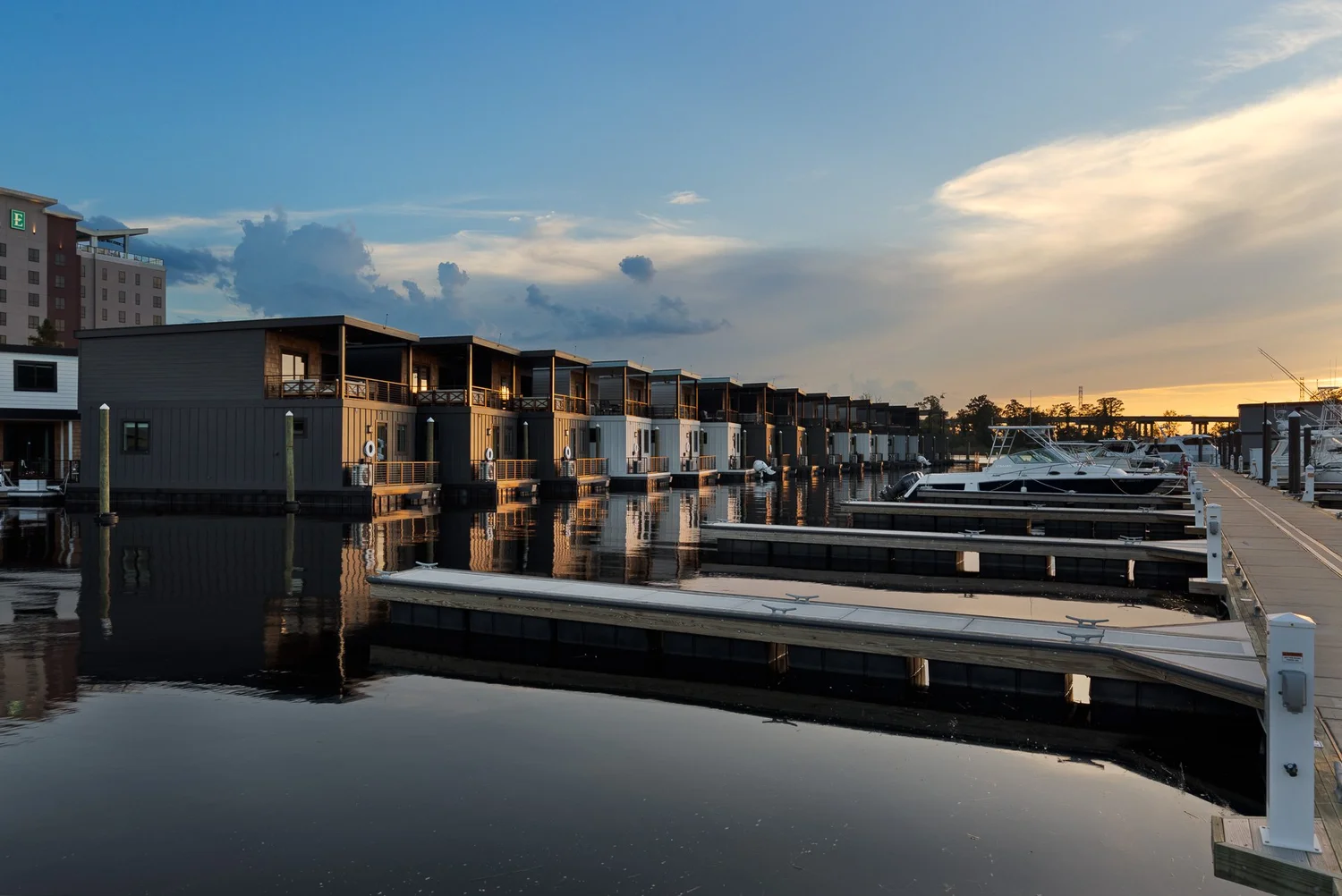
Waterfront environments place unusual demands on buildings, landscapes, and infrastructure. Wind, water, salt air, sun exposure, public traffic, and maintenance needs all shape the long-term performance of a project.
A resilient waterfront project should not simply survive its setting. It should be designed to belong there.
This means selecting materials, assemblies, landscape strategies, and infrastructure systems with operational realities in mind. A durable project is easier to maintain, easier to operate, and better positioned to serve its community over time.
The public realm carries the memory of the project.
The most memorable waterfront places are often defined less by a single building and more by the spaces between buildings: walks, plazas, overlooks, marina edges, restaurant patios, and public gathering areas.
When these spaces are carefully planned, they create a sense of invitation and continuity. When they are treated as afterthoughts, the project may feel disconnected from the very waterfront it is meant to celebrate.
The long view is the practical view.
Waterfront development is long-term work. Site conditions change, markets evolve, tenants rotate, and public expectations grow. The most resilient projects are those that anticipate change without losing their original purpose.
For Zephyr Development, that means approaching waterfront projects through the lens of stewardship: creating places that can be maintained, adapted, experienced, and valued for years to come.